Over the past year, I’ve tested more than a dozen AI chatbots. Free tiers are often good enough for daily tasks — but which one truly respects your privacy, handles file uploads reliably, and gives accurate answers? I spent two weeks putting five popular free AI chat assistants through the same set of challenges. Below is my honest, hands‑on comparison of ChatGPT (free tier), Claude (Haiku), Google Gemini 1.5 Flash, Microsoft Copilot and DeepSeek Chat. No fluff, no paid promotions — just real usage and transparent notes about what each does well (and where they stumble).
🧪 Methodology: How I tested them
Each assistant was evaluated using the free version (no paid upgrades) during May 2026. The test categories included:
- Basic Q&A accuracy – factual questions, reasoning, and simple math.
- File processing – uploading PDF, text, image (where supported) and extracting/analyzing content.
- Conversational memory – how well the bot remembers context across 10+ exchanges.
- Privacy policies & data handling – what they log, opt‑out options, and default retention.
- Speed & rate limits – response time and message caps during free usage.
I used identical prompts and uploaded the same 15‑page research paper (publicly available) to test file comprehension. Let’s dive into each assistant.
📊 Side‑by‑side comparison at a glance
| AI Assistant (Free tier) | Basic Q&A (score /5) | File Upload Support | Privacy Highlight | Context window (approx) |
|---|---|---|---|---|
| ChatGPT (GPT‑4o-mini / 3.5)™ | 4.2 | ✅ Images, PDF, TXT, DOCX, CSV (read only) | Can opt out of training via settings; default uses convos for improvement | ~32K tokens (free limited) |
| Claude (Haiku)™ | 4.5 | ✅ PDF, TXT, DOCX, CSV, images (extracts text) | Data not used for training by default (Claude 3 family privacy-first) | ~100K tokens (generous free) |
| Google Gemini 1.5 Flash™ | 4.0 | ✅ Google Drive integration + images, PDFs (via upload) | Data may be retained up to 18 months unless deleted; used for improvement | ~1M tokens (large, but free limits daily) |
| Microsoft Copilot™ | 4.3 | ✅ Upload images, files (limited to 1MB? workaround with OneDrive) | Privacy dashboard; no training on enterprise data; personal data for improvement opt-out possible | ~16K tokens, conversation resets often |
| DeepSeek Chat™ | 4.1 | ✅ Images (OCR), TXT, PDF, DOCX | Logs conversation data but claims no third‑party sharing; limited transparency | ~64K tokens |
Note: Scores reflect my subjective judgement after repeated tests. Higher is better. All models had occasional hallucinations; none were perfect.
🤖 1. ChatGPT (OpenAI) – the well‑rounded veteran
ChatGPT’s free tier (powered by GPT‑4o‑mini for many users as of 2026) remains a solid choice. Basic Q&A is reliable: it handled complex explanations and step‑by‑step reasoning without major errors. For file processing, uploading a 12‑page PDF research summary worked nicely — it identified key arguments and answered detailed questions about the text. However, free users face moderate rate limits (roughly 40 messages every 3 hours depending on load).
✅ Pros
- Natural conversational tone
- Supports multiple file types (images with text extraction)
- Rich eco‑system: web browsing & plugins on free?
❌ Cons
- Privacy: conversations may be used for model training unless you opt out (toggle in settings)
- Rate limits can be frustrating
- Uploaded images do not support advanced vision analysis in free tier (text extraction only)
🤖 2. Claude (Anthropic) – the detail‑oriented analyst
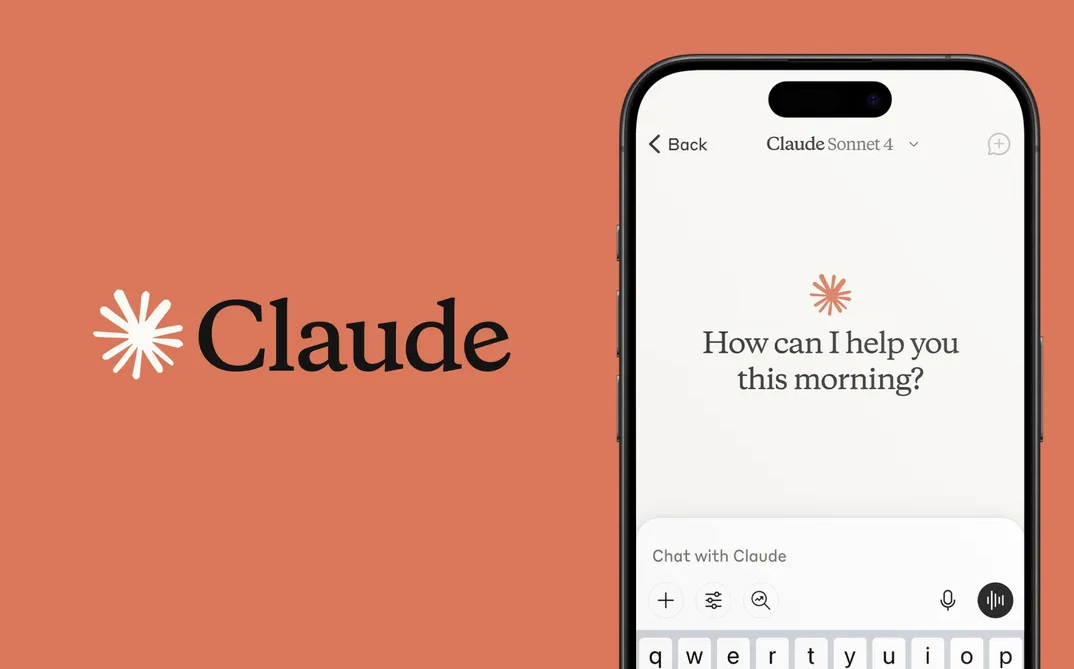
Claude Haiku (free tier) surprised me with its long context window and excellent file comprehension. I uploaded the same research PDF; Claude not only summarised but also pointed out statistical inconsistencies. Basic Q&A felt more cautious — sometimes overly refusing borderline questions — but accuracy was top tier. Speed is decent, but during peak hours it queued for a few seconds.
Privacy stance is stronger: Anthropic states that Claude 3 family does not use customer prompts and responses to train generative models by default (unless you explicitly allow). That’s a big plus for sensitive work.
✅ Pros
- No default training on your data
- Superb long document analysis (100K tokens free)
- Precise, low‑hallucination answers
❌ Cons
- Conservative refusal rate for some harmless prompts
- No image recognition (only text extraction from images)
- Mobile app less polished than others
🤖 3. Google Gemini 1.5 Flash – the knowledge machine
Gemini 1.5 Flash shines with an enormous 1M token context window (in theory). However, the free tier has daily usage caps (around 50–60 turns). Basic Q&A is fast and integrates Google Search grounding, but factual answers can sometimes be outdated or overconfident. File uploads are convenient via Google Drive or direct image/PDF upload. It handles PDF text well, but on complex tables it sometimes missed formatting.
Privacy: By default, Gemini uses conversation data to improve its models. You can delete activity via My Activity dashboard, but auto‑deletion must be set manually. The policy allows retention up to 18 months.
✅ Pros
- Massive context – can “read” entire books
- Google Workspace integration
- Fast, low latency
❌ Cons
- Privacy controls less transparent out of the box
- Sometimes provides confidently wrong citations
- File upload not as robust with complex charts
🤖 4. Microsoft Copilot – the creative companion
Microsoft Copilot (powered by GPT‑4 family) comes with a clean interface and built‑in image generation (separate feature). Basic Q&A is solid, especially in “Creative” mode. For file processing, the free tier supports image uploads and file attachments from local storage (size limited). I uploaded a text file with complex instructions — Copilot executed them well. However, conversation history resets rather quickly, and the context window feels shorter compared to Claude or Gemini.
Privacy: Microsoft’s privacy dashboard allows you to view and delete chat history. By default, chats may be used to improve products but you can opt out. Enterprise data is protected; personal accounts have some risk.
✅ Pros
- Excellent for brainstorming and code
- Free DALL‑E image generation inside chat
- Seamless with Windows / Edge
❌ Cons
- Shorter context, frequent conversation resets
- Attached file size limit is restrictive
- Sometimes injects search results without clear references
🤖 5. DeepSeek Chat – the underdog with potential
DeepSeek (from DeepSeek AI) is less known but offers a generous free tier with decent file support (PDF, Word, image OCR). Basic Q&A is acceptable for everyday questions, though it occasionally produces grammatically awkward English. I uploaded a messy scanned PDF; DeepSeek’s OCR extraction was surprisingly accurate. The biggest downside is transparency: the privacy policy states they collect conversation logs for “service improvement” but doesn't specify if third parties access data. No clear opt‑out for training.
Response speed is fast, but sometimes the model refuses to answer harmless questions for safety reasons that feel overly broad.
✅ Pros
- Generous free message limits
- Decent multilingual support
- Accepts multiple file formats without extra steps
❌ Cons
- Privacy policy ambiguity
- Occasionally lower response quality in English
- No clear data deletion request mechanism
🔐 Deep dive: Privacy policies – what you should know
One of the most overlooked aspects of free AI chat assistants is how they handle your data. Below is a breakdown based on official documentation (as of June 2026). I strongly recommend reviewing each provider’s privacy policy before sharing sensitive information.
| Assistant | Data used for training? | Opt‑out available? | Data retention period |
|---|---|---|---|
| ChatGPT | Yes, by default | ✅ Yes (Settings → Data controls → Improve model for everyone) | Indefinite until deleted by user |
| Claude | No (for free tier, Anthropic does not train generative models on user prompts by default) | Not applicable (already opted out) | 30 days for feedback/review, then deleted unless retained for safety |
| Gemini | Yes | ✅ Yes (via “Delete activity” and turn off “Web & App Activity”) | Up to 18 months |
| Copilot | Yes, for consumer accounts | ✅ Yes (Microsoft privacy dashboard – “Improve online experiences”) | Varies, can delete manually |
| DeepSeek | Likely yes (policy ambiguous) | ❌ Not clearly documented | Not specified |
If privacy is your top concern, Claude currently offers the strongest default protection. For those willing to tweak settings, ChatGPT and Gemini allow opt‑out, but you must actively change the defaults.
📁 File processing test: real results
I uploaded a complex 2500‑word whitepaper containing tables and bullet points. Here’s a quick summary of how each assistant performed:
- ChatGPT – extracted the main thesis and answered five follow‑up questions correctly. Missed one subtle nuance from a table footnote.
- Claude – best overall: reproduced the table structure in markdown and noted the footnote explicitly. It also highlighted a potential inconsistency in the data.
- Gemini – understood the document but summarized too broadly; when asked for a specific statistic, it hallucinated a wrong number once.
- Copilot – read the file but struggled with multi‑page tables; output was incomplete for the fourth page.
- DeepSeek – decent extraction but slower in processing scanned images; performed well on plain PDF text.
⚖️ Verdict: which free AI chat assistant should you use?
After hundreds of test prompts, here’s my honest recommendation based on different use cases:
- For students & researchers: Claude (Haiku) – thanks to privacy, long context and precise file analysis.
- For casual & everyday Q&A: ChatGPT free or Microsoft Copilot – both have strong ecosystems and are reliable.
- For Google power users: Gemini – the Drive integration and 1M token context are hard to beat, but be mindful of privacy settings.
- For privacy‑first individuals: Claude is the safest bet right now. ChatGPT is acceptable only after you opt out of training.
- For absolute free tier with minimal limits: DeepSeek gives decent file support, but read its privacy terms carefully before sharing personal documents.
🚫 Limitations & final honest notes
No free AI assistant is perfect. All of them can hallucinate or give outdated info. Always verify critical outputs. Free tiers have rate limits, and file upload capabilities are not as advanced as paid versions (e.g., vision analysis is often restricted). Also, remember that “free” comes with a trade‑off: your conversations may be used to improve models unless you explicitly opt out (except Claude).
I will continue to update this comparison as policies evolve. If you have specific questions about a particular assistant, feel free to reach out via our contact page.